

Menu
Available Technologies
Method for Preparing Easy-to-Handle Protein Sheets such as Keratin and Collagen
Enables detachment-free protein sheet fabrication for cell sheet engineering and scaffold development.
Background
Protein sheets such as collagen and keratin have diverse applications in wound care, regenerative medicine, and cosmetics. Conventional fabrication methods, however, often suffer from complex processing, insufficient mechanical strength and flexibility, and structural non-uniformity.
Description and Advantages
Researchers at Kyoto University have developed a simple method for fabricating protein sheets by density gradient centrifugation, eliminating the need for complex processes such as solution casting (Fig. 1).The resulting sheets are mechanically robust enough to be handled with tweezers while retaining their shape. SEM analysis also revealed a porous structure (Fig. 2), which may enhance compatibility with cells and other materials. The sheets have potential applications as scaffolds for cell sheet engineering (Fig. 3), as well as collagen or keratin sheets for burn care, regenerative medicine, and aesthetic applications.
‣ Simple fabrication of protein sheets
Protein sheets can be fabricated without heating or drying and are readily recovered.
‣ Tunable sheet properties through crosslinking
Sheet properties can be tuned simply by adding or omitting a crosslinking agent: crosslinking enhances elasticity and strength, while non-crosslinked sheets offer greater flexibility.
‣ Compatibility with various cell types
The protein sheets can be combined with various cell types and used as scaffolds for cell sheet fabrication (Fig.3).
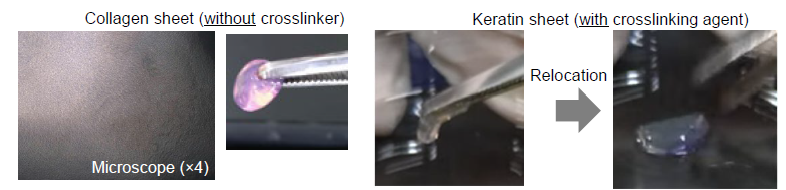
Fig.1. Protein Sheets Prepared by the Proposed Method
Both the collagen and keratin sheets could be easily handled with tweezers.
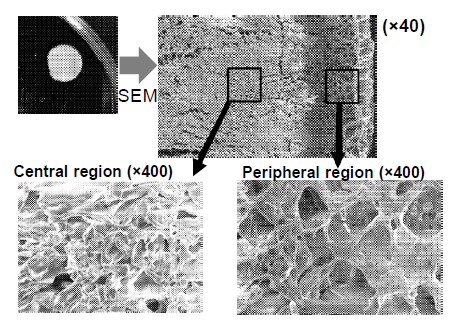
Fig.2. Freeze-dried keratin sheet (with crosslinker)
SEM analysis revealed a porous structure of the sheet.
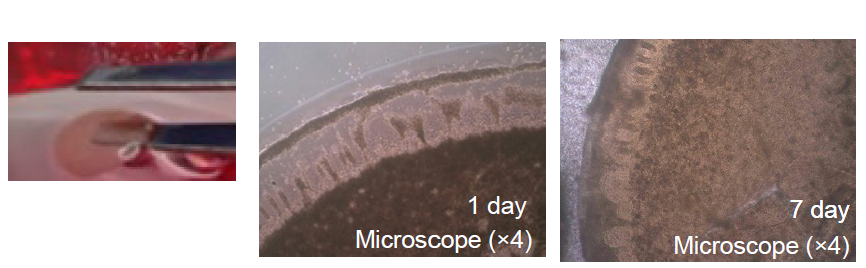
Fig. 3. Cells cultured on a keratin sheet (without crosslinker)
The sheet was easily lifted and handled with tweezers. After 7 days of culture, the sheet retained its morphology, indicating good structural stability. Cell proliferation was observed at the sheet edges, suggesting that the cells remained viable and proliferative.
| Development Status |
・ Lab-scale sheet fabrication method established ・ Successful fabrication demonstrated with keratin and collagen ・ Cell culture compatibility demonstrated with the sheets as substrates |
|---|---|
| Offer | • Patent License • Option for License |
| Related Links | View PDFView in Japanese |
Have you found what you were looking for?
- Interested in a particular research activity
- Cannot find the information
- Have questions on how to utilize research results
Feel free to contact us and get answers to your questions.
Inquiry- TLO-KYOTO
- Available Technologies
- Method for Preparing Easy-to-Handle Protein Sheets such as Keratin and Collagen

3rd Floor, International Science
Innovation Building, Kyoto University
Yoshidahonmachi, Sakyo-ku, Kyoto
606-8501 JAPAN